
Chicken under a brick is a culinary technique that involves weighing down a spatchcocked bird to ensure even contact with a searing hot surface. My journey at Eminent Recipes began when I sought to master the perfect roast chicken in my own cramped kitchen. I discovered that simple physics transforms a standard dinner into an extraordinary meal. This method yields perfectly golden, crispy skin and incredibly succulent meat, making it an ideal choice for busy weeknights or impressive gatherings.
You will love this recipe because it is quick, efficient, and exceptionally family-friendly. It provides a balanced, one-pot meal that requires minimal cleanup after a long day. Whether you are hosting a special occasion or simply preparing a nutritious meal for your household, this approach guarantees consistent results every single time. The customization options allow you to adapt the flavors to match your pantry staples or seasonal herb availability.
Recipe Overview
| Prep Time | Cook Time | Total Time | Servings | Difficulty | Cuisine |
|---|---|---|---|---|---|
| 15 mins | 50 mins | 1 hour 5 mins | 4 | Easy | Mediterranean |
Why This Recipe Works
This recipe works because the physical weight of a second cast-iron skillet maximizes surface contact with the primary cooking vessel. By using a spatchcocked chicken, you eliminate the gap between the bird and the heat source, which promotes rapid rendering of fat and intense browning. This technique mimics the effect of a traditional brick, which has been used in rural kitchens for centuries to achieve unparalleled crispness without overcooking the delicate breast meat.
My experience has taught me that the primary secret lies in maintaining a scorching hot pan before the chicken ever makes contact. When the bird hits the hot oil, the Maillard reaction begins instantly, creating a savory crust that holds in all the natural juices. This method is far superior to standard oven roasting, as it drastically reduces the overall cooking time while delivering a restaurant-quality texture that is impossible to replicate with conventional methods.
Ingredients
| Ingredient | Quantity | Notes |
|---|---|---|
| Whole Chicken | 3 pounds | Spatchcocked for even cooking |
| Olive Oil | 5 teaspoons | Divided use |
| Lemon Juice | 1 tablespoon | Freshly squeezed |
| Fresh Thyme | 1 tablespoon + 5 sprigs | Leaves for rub, sprigs for roasting |
| Kosher Salt | To taste | Enhances natural savory notes |
| Black Pepper | To taste | Freshly ground preferred |
| Unsalted Butter | 1 tablespoon | Adds richness during final roast |
| Garlic | 8 cloves | Leave unpeeled for roasting |
Step-by-Step Instructions
Preparation
- Preheat your oven to 475°F to ensure a high-heat environment suitable for crisping skin.
- Rinse the chicken thoroughly and pat it completely dry with paper towels to facilitate better browning.
- Place the chicken on a stable cutting board, breast-side up.
- Use your body weight to press down firmly on the breastbone until the bird flattens significantly.
Marinating
- Combine 1 tablespoon of olive oil, lemon juice, and fresh thyme leaves in a small bowl.
- Brush this mixture evenly over the entire surface of the chicken.
- Rest the chicken uncovered in the refrigerator for one to two hours to allow the skin to dry out.
Cooking
- Season the surface of the chicken generously with kosher salt and black pepper.
- Heat a large cast-iron skillet over medium-high heat with the remaining 2 teaspoons of olive oil.
- Place the chicken breast-side down into the hot skillet.
- Position a second heavy cast-iron skillet directly on top of the chicken to apply even pressure.
- Set a timer for three minutes before transferring the entire assembly into the preheated oven.
- Roast for 30 minutes until the skin becomes deep golden brown.
- Remove the skillet from the oven and carefully flip the chicken over.
- Add the butter, fresh thyme sprigs, and garlic cloves to the pan.
- Baste the skin with the rendered fat and melted butter for optimal flavor.
- Roast for an additional 20 minutes until an instant-read thermometer reaches 165°F in the thickest part of the thigh.
Resting
- Remove the chicken from the oven and let it rest for at least 15 minutes before carving.
- Slice the chicken into pieces using a sharp knife and serve immediately.
Chef Tips for Perfect Results
- Always dry your chicken thoroughly with paper towels; moisture on the skin prevents proper searing and browning.
- Use a cast-iron skillet for both the base and the weight, as it retains heat better than other materials.
- Ensure the pan is truly hot before adding the chicken to prevent sticking and ensure a good initial sear.
- Rest the bird for the full 15 minutes to allow the juices to redistribute back into the meat.
- If your garlic cloves begin to brown too quickly, push them into the pan’s corners away from direct heat.
Common Mistakes to Avoid
One common mistake is overcrowding the pan, which lowers the temperature and causes steaming instead of crisping. Ensure your skillet is large enough to accommodate the flattened bird comfortably. Another error is failing to dry the skin, which results in soggy textures. Always invest time in patting the bird dry before applying any oil or seasonings.
Using a cold pan is a frequent pitfall that leads to the meat sticking to the surface. Wait for the oil to shimmer before adding the chicken to guarantee an easy release. Finally, skipping the resting phase leads to dry meat. Resting allows the internal temperature to stabilize and ensures every bite remains succulent.
Variations and Substitutions
| Ingredient | Substitution | Flavor Impact |
|---|---|---|
| Thyme | Rosemary or Oregano | Woodier or more pungent aroma |
| Lemon Juice | Apple Cider Vinegar | Sharper, more acidic profile |
| Butter | Ghee | Nutty, toasted depth |
Frequently Asked Questions
Can I substitute chicken parts for a whole chicken?
You can use bone-in, skin-on chicken thighs or breasts, though you must adjust the cooking time significantly. Adjust the roasting duration to ensure the meat reaches 165°F without drying out the smaller cuts.
How do I know the chicken is fully cooked?
The chicken is fully cooked when an instant-read thermometer inserted into the thickest part of the thigh registers exactly 165°F. Relying on visual cues is often inaccurate, so a thermometer remains the only way to guarantee safety.
What if my skillet is not oven-safe?
Ensure you use a heavy-duty cast-iron skillet or stainless steel pan capable of withstanding high oven temperatures. If your cookware has plastic or non-heat-resistant handles, it is unsuitable for this high-heat roasting method.
Can I prepare this dish in advance?
You can marinate the chicken and keep it refrigerated for up to four hours before cooking. However, the actual searing and roasting must be done immediately before serving to maintain the signature crispy skin.
Is this recipe suitable for low-sodium diets?
You can omit the salt or substitute it with fresh herbs like rosemary and sage to enhance flavor without sodium. The searing process already provides a savory quality, so you will still enjoy a delicious crust.
Mastering this technique will change how you approach poultry forever. By embracing the weight of the skillet, you achieve results that rival the finest professional kitchens. Serve this bird alongside roasted vegetables or a crisp side salad for a balanced meal. Explore more simple, high-impact techniques on Eminent Recipes to elevate your home cooking repertoire with confidence and professional flair.
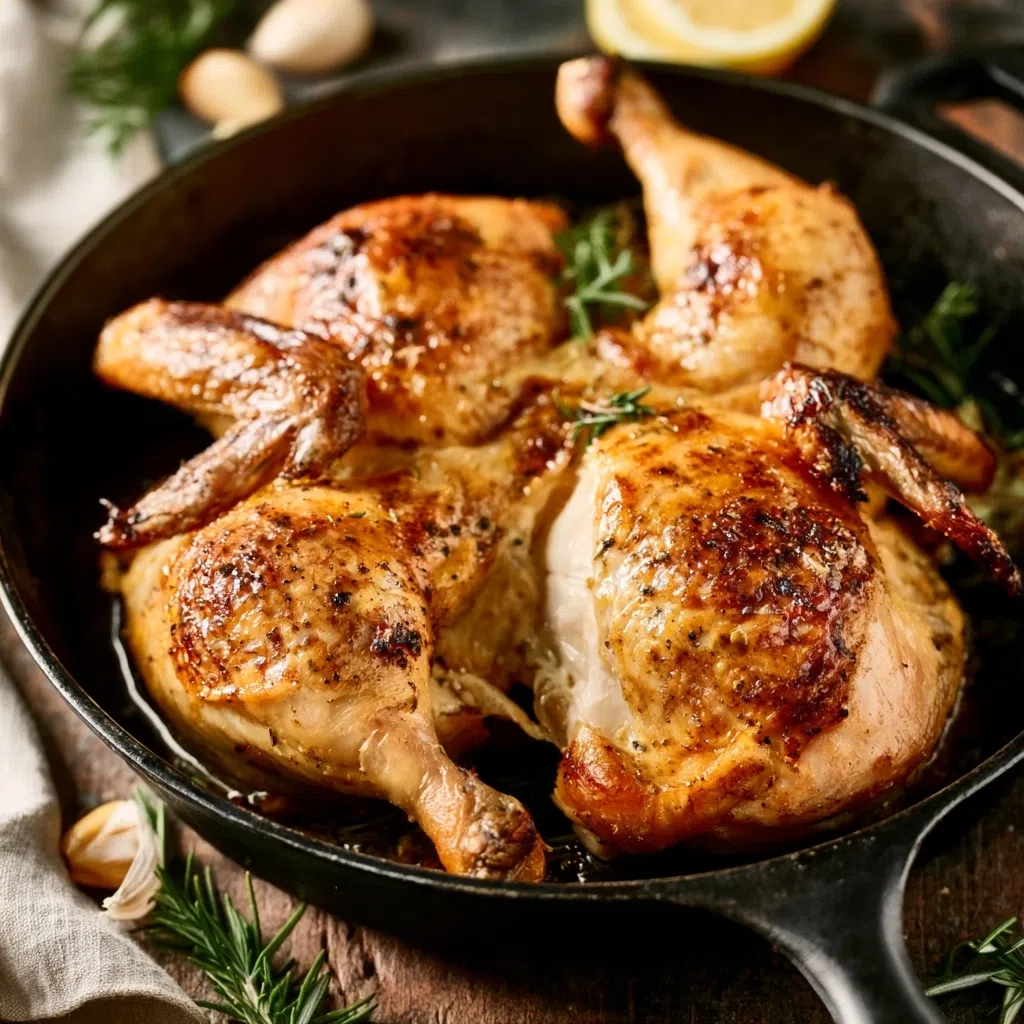
Crispy Chicken Under a Brick
Ingredients
Method
- Preheat your oven to 425°F (220°C).
- Pat the spatchcocked chicken completely dry with paper towels to ensure crispy skin.
- Season both sides of the chicken generously with kosher salt, black pepper, and fresh thyme leaves.
- Heat a large cast-iron skillet over medium-high heat with 4 teaspoons of olive oil until just smoking.
- Place the chicken in the hot skillet, skin-side down, and place a second heavy skillet on top to act as a weight.
- Sear for 8-10 minutes until the skin is deep golden brown and crispy.
- Remove the weight, flip the chicken, and add butter, garlic cloves, and thyme sprigs to the pan.
- Transfer the skillet to the oven and roast for 40 minutes, or until the thickest part of the meat reaches 165°F (74°C).
- Remove from heat, drizzle with fresh lemon juice, and let rest for 10 minutes before carving.